Honest pricing note: All charter rates are indicative ranges (last verified June 2026) and vary by boat size, comfort level, group size and season — July to September and major holidays price at the top; final pricing is confirmed by proforma. Komodo National Park entrance, ranger and activity fees are set by the government, change periodically, and are paid separately per person per day — we explain them but do not collect them. Wildlife and weather cannot be guaranteed: we tell travellers what to expect, not what they want to hear. This is general information, not travel or legal advice. We are an independent Labuan Bajo charter concierge and coordinate vetted boats.
Manta Point Komodo is a shallow reef and channel in Komodo National Park where reef manta rays often cruise, feed and visit cleaning stations, making it one of Indonesia’s most reliable manta snorkelling sites. From Labuan Bajo, a private speedboat or phinisi charter can reach Manta Point in around 60–90 minutes, allowing you to time the currents and tides for safe, rewarding manta encounters.
Where Is Manta Point Komodo & How Do You Get There?
Manta Point (often called “Makassar Reef”) sits in the central-north area of Komodo National Park, in the channel between Komodo Island and Flores. It’s a long, mostly shallow reef with patches of coral and sandy bottom where manta rays cruise in lines along the current.
From Labuan Bajo on Flores — the gateway town with the harbour and airport — you reach Manta Point entirely by boat. There is no land access.
Travel time from Labuan Bajo
- Fast private speedboat
- Approx. 60–90 minutes each way from Labuan Bajo harbour, depending on sea conditions and engine power (data cross-checked with typical park routing times in Komodo National Park).
- Shared day-trip speedboat
- Similar raw speed, but usually slower overall because of fixed route order, group logistics and waiting times at each stop.
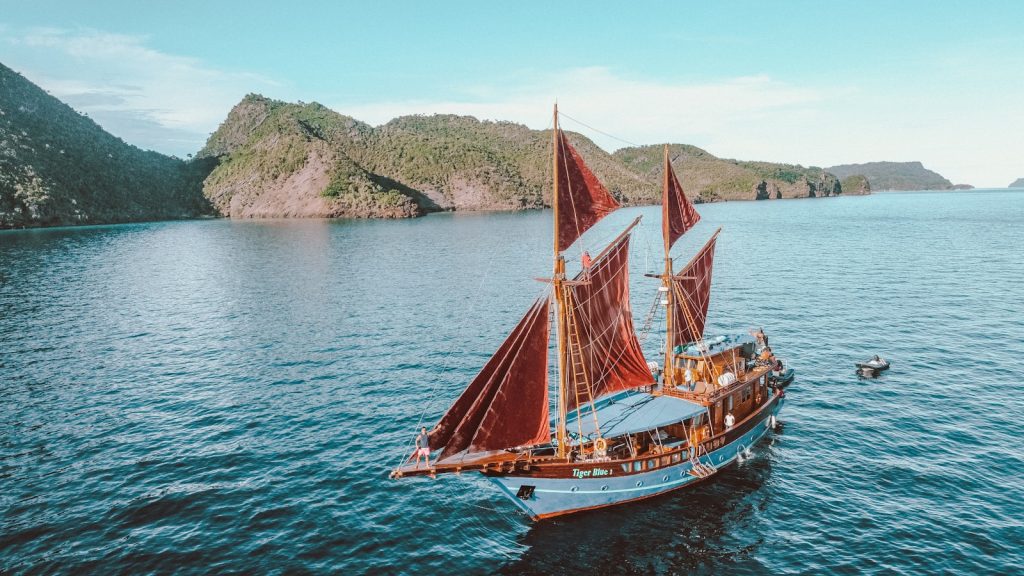
- Phinisi (traditional wooden liveaboard)
- 3–4+ hours depending on the vessel; usually integrated into a multi-day Komodo itinerary with other snorkel or dive sites along the way.
Private Komodo Charter does not operate boats directly; we match you with vetted Labuan Bajo operators whose vessels, guides and safety standards we track continuously. No one can pay to change what we publish; if you proceed with our partner they may pay us a referral fee at no extra cost to you.
Why Manta Rays Gather at Manta Point & Manta Alley
Two main manta ray areas are relevant for planning your Komodo snorkelling: Manta Point in the north, and Manta Alley off the south of Komodo Island. Both are within Komodo National Park and both can produce outstanding encounters — but they behave differently.
Cleaning stations and current “highways”
Manta rays are drawn to Komodo by a combination of:
- Cleaning stations — patches of reef where cleaner wrasse and other small fish pick parasites and dead skin off the mantas’ bodies, gills and mouths. Mantas circle slowly here, sometimes queueing in turn.
- Plankton-rich upwelling — Komodo sits at the meeting point of the Pacific and Indian Oceans. Tidal exchanges force cold, nutrient-rich water up through the straits. This fuels plankton blooms, which mantas filter-feed on with open mouths and flared cephalic fins.
- Channel shape — at Manta Point, the broad shallow shelf and channel compress current into “highways” mantas like to cruise along, usually into the prevailing flow. At Manta Alley, steep walls and a funnel-shaped bay create eddies and feeding zones.
On a good tide, you may see mantas:
- Gliding in single file along the reef edge
- Hovering over cleaning stations while reef fish work on them
- Looping and barrel-rolling through thin plankton layers at the surface
Because these are wild animals, numbers vary day by day — some sessions deliver a couple of close passes, others bring “manta trains” of 10+ individuals circling for 30–40 minutes. No operator can guarantee how many you will see.
Best Season to See Manta Rays in Komodo
You can see manta rays in Komodo National Park year-round, but probability and conditions change with the monsoon cycle.
Season overview
| Period | Conditions | Manta Point (North/Central) | Manta Alley (South) |
|---|---|---|---|
| April – October (Dry season) | Generally calmer seas, better visibility, less rain | High manta probability, especially July – August; popular for manta ray Komodo snorkelling | Good, but southern swells can pick up July–August |
| November – early December (Shoulder) | Transition: variable wind, occasional showers | Often still productive; visibility can start to drop with more plankton | Trips increasingly weather-dependent |
| Mid-December – March (Wet season) | Frequent rain, rougher seas; some days cancelled | Still possible, but many operators trim schedules; site often combined with central-sheltered spots only | Often inaccessible due to swell; many boats avoid the south |
Based on long-term patterns tracked with Labuan Bajo guides:
- Best overall period: April – October for a Komodo manta point tour with relatively calm seas and a high chance of encounters.
- Peak manta aggregation: July – August often show dense plankton and more consistent sightings, but also the busiest tourist period.
- Wet season trade-off: Plankton can be abundant, which mantas love, but wind, rain and rough seas can stop boats from reaching Manta Point or especially Manta Alley.
No month offers 100% certainty. You are stacking the odds, not buying a guarantee. Even in August, an off-cycle tide, unusually clear water or heavy boat traffic can thin out sightings on a particular day.
Snorkelling Experience at Manta Point Komodo
Manta Point is primarily a snorkelling site. Depths around the main route are typically 3–15 metres, with sand, scattered coral bommies and occasional turtles or reef sharks cruising the bottom.
How a typical session works
- Site briefing — your guide explains the day’s current direction, entry point, exit point and safety signals. At Private Komodo Charter, we push operators who provide clear English briefings and in-water guides.
- Timed water entry — you usually enter from the boat upstream of the manta “highway”, so the current carries you gently along the manta route.
- Drift snorkel — you float at the surface, kicking periodically to adjust position, while mantas cruise up-current. You rarely need to chase; you let the animals approach or pass beneath.
- Pick-up — the boat tracks your surface marker (if used) or follows you visually and collects you downstream. Many groups do 2–3 drifts if conditions and mantas are good.
The reef itself here is not as colourful as Batu Bolong or Crystal Rock. People visit Manta Point for big animals — mantas first, turtles and occasional eagle rays second — rather than intricate coral gardens.
Conditions: current, visibility and comfort
- Current — Manta Point sits in a channel with significant tidal flow. On good days, this means a gentle “airport travelator” drift. On strong tides, currents can be fast and may form cross-currents or whirlpools. Timing matters (see tidal section below).
- Visibility — ranges widely, roughly 5–20+ metres depending on plankton levels, wind and tides. More plankton often equals more mantas but “greener” water.
- Temperature — usually 26–29°C at the surface, cooler if an upwelling hits. Many snorkellers are happy in a rash guard; a 2–3 mm shorty is more comfortable if you chill easily.
If you prefer calm, easy water, talk to us in advance so we can align your day with weaker tidal exchanges where possible. If you are a confident swimmer and enjoy faster drifts, we can aim for more energetic windows.
Manta Alley vs Manta Point: Which Should You Choose?
Manta Alley lies off the southwest corner of Komodo Island, significantly further from Labuan Bajo and far more exposed to swell and wind. It is famous in dive circles for dense manta aggregations, but it is logistically harder to reach.
| Feature | Manta Point (North/Central) | Manta Alley (South Komodo) |
|---|---|---|
| From Labuan Bajo by fast boat | ~60–90 minutes | Rarely done as a day-trip; typically reached via overnight liveaboard phinisi |
| Exposure to weather | Moderate; usually reachable most dry-season days | High; often too rough in wet season and on windy dry-season days |
| Main audience | Snorkellers & mixed snorkel-dive trips | Certified scuba divers on multi-day itineraries |
| Manta behaviour | Gliding drifts along a shallow channel; good for surface views | More vertical movement and cleaning “stations” on walls; many encounters deeper than snorkel range |
| Suitability for first-timers | Good, with proper guide and tidal timing | More advanced: stronger swell, surge and current are common |
If your priority is snorkelling with manta rays from Labuan Bajo in one day, Manta Point is the realistic primary target. Manta Alley is best treated as a bonus for experienced divers on 2–4 night trips who are comfortable with exposed southern conditions.
Why Timing the Tides Matters So Much
Komodo’s strong tides make the area vibrant — and occasionally challenging. The same water movement that feeds plankton and attracts mantas also creates powerful currents.
The basics: tide phases at Manta Point
- Slack tide (around high or low tide) — current is at its weakest as it changes direction. Often easiest for less-confident swimmers but sometimes less manta action because food movement slows.
- Building or falling tide — current gains strength as water level moves away from slack. This is often when mantas are more active, but drifts can be faster.
- Spring tides (around full and new moon) — larger tidal range, stronger currents. Can mean exciting manta feeding and big drifts but also more demanding conditions.
- Neap tides (half-moon) — smaller tidal range, milder currents, generally calmer snorkel conditions.
An experienced captain will time your entry to ride the main channel in a controlled way, avoiding back-eddies and known turbulence zones. On some days, they may shift you slightly off the classic manta highway to prioritise safety over being in the absolute “thick” of the current.
Why private charter helps at Manta Point Labuan Bajo
Shared “open-trip” tours from Labuan Bajo often run fixed timetables: 1–2 hours at Padar, 1–2 hours at Pink Beach, a short stop at Komodo or Rinca for dragons, then Manta Point as the last or second-last stop. That can mean you arrive at Manta Point when it suits the schedule — not the tide.
With a private manta point Komodo charter, we can:
- Plan your Manta Point session around the day’s optimal tidal window, even if that means going there first and visiting islands later.
- Stay longer or do extra drifts when the mantas are active, instead of being forced to leave on a group timetable.
- Shift to nearby snorkel sites (such as Siaba Besar for turtles) if Manta Point turns out quiet, without needing group consensus.
If you’d like a tidal plan tailored to your travel dates, tides and comfort level, plan your trip with us — WhatsApp-first conversations work well for sharing dates, fitness levels and expectations quickly.
Safety: Snorkelling in Strong Currents with Life Jackets
For many guests, Manta Point is their first experience of a true “current-drift” snorkel. Handled properly, it is exhilarating and safe; handled casually, it can be overwhelming.
Who should use a life jacket?
At Manta Point, we usually recommend a life jacket for:
- Non-swimmers or weak swimmers
- Guests who are nervous in open water
- Anyone snorkelling on a stronger current phase, especially on spring tides
A life jacket keeps you positively buoyant, so you can focus on watching mantas rather than staying afloat. You will still drift with the current; the key is staying close to the guide and listening to instructions.
Guide-to-guest ratios and in-water support
On a private charter, we insist on:
- At least one in-water snorkel guide who knows the site, not just a boat captain observing from the deck.
- Briefing before each entry — current direction, where to look for mantas, what to do if you feel tired, and how pickup will work.
- Surface support — the boat stays nearby and tracks the group; in some cases, a rescue ring or float line accompanies the snorkellers.
If you have children, older travellers or anyone with mobility limits in your group, tell us early. We can match you to calmer tidal windows, more conservative guides, and sometimes even adjust which manta corridor you use.
Snorkelling vs Diving with Mantas in Komodo
You do not need dive certification to have excellent manta encounters at Manta Point. In fact, most manta ray Komodo snorkelling takes place from the surface, where you can see mantas clearly as they cruise beneath or near you.
Snorkel-only manta trips
A typical snorkel-focused day from Labuan Bajo might include:
- Manta Point (manta rays and possible turtles)
- Kanawa, Sebayur or similar for relaxed coral snorkelling
- Siaba Besar for calm conditions and high turtle probability
- An island viewpoint stop (Padar or a closer alternative) depending on how early you depart
These trips use mask, snorkel and fins only. Life jackets or snorkel vests are available; wetsuits are sometimes rentable at extra cost (availability varies by operator).
Dive trips to Manta Point & Manta Alley
Certified divers can experience mantas more three-dimensionally — watching them circle cleaning stations below, or hovering away from the surface crowds. Requirements and notes:
- Certification — at least Open Water Diver or equivalent is expected for most manta dives.
- Equipment — scuba tanks, BCD, regulator, weights and dive computer are typically rented as a package, charged separately from boat charter fees (last verified June 2026: expect gear/day surcharges rather than all-inclusive pricing).
- Dive guides — Komodo’s currents are complex; we strongly recommend you dive only with experienced local dive guides who know Manta Point and Manta Alley well.
- Depth — manta dive profiles at Manta Point are often 10–18 metres; at Manta Alley, walls and deeper cleaning stations may require tighter respect for no-deco limits and gas management.
If your group mixes snorkellers and divers, we can structure a private Komodo manta point tour that lets divers descend while snorkellers watch from the surface, then reconvene for island visits.
What Else Can You See Near Manta Point?
Manta rays are the main event, but they are not the only wildlife you may encounter in this part of Komodo National Park.
- Turtles — green turtles are reasonably common throughout the area; Siaba Besar, often combined with Manta Point on the same day, is famous for frequent turtle encounters on a calm sandy bottom.
- Reef sharks — usually white-tip or black-tip reef sharks, shy and small; you may glimpse them on the sand or cruising the channel edges.
- Tuna and trevally — schools of fusiliers, jacks and trevallies sometimes rip through the current chasing baitfish.
- Coral life — while Manta Point’s coral is modest, nearby Batu Bolong and Crystal Rock (reached on fuller-day charters) hold some of Komodo’s most colourful reefs for those wanting a coral-focused session.
On land, many private charters pair a manta day with a Komodo dragon trek on Rinca or Komodo Island, depending on timing and tides. We can help you sequence these so you are not rushing between land and water in the hottest hours unnecessarily.
How a Private Komodo Manta Point Tour Day Usually Flows
Each itinerary is customised, but here is a realistic outline for a private speedboat day from Labuan Bajo targeting Manta Point snorkelling (timings are examples, not fixed promises):
- 06:00–07:00 — Hotel pick-up, harbour check-in, safety briefing.
- 07:00–08:30 — Direct run to Manta Point, timing arrival for the planned tidal window.
- 08:30–10:30 — 2–3 snorkel drifts at Manta Point, with breaks on the boat, flexible to conditions and manta activity.
- 10:30–12:00 — Short ride and snorkel stop at a nearby coral reef (for example, Siaba Besar or another sheltered site) with tea/coffee or early lunch onboard.
- 12:00–15:00 — Optional Komodo dragon trek (Rinca or Komodo), or additional reef snorkelling and scenic island stop.
- 15:00–16:30 — Return to Labuan Bajo harbour.
On phinisi liveaboards, manta sessions are woven into 2–4 day itineraries that may also include Batu Bolong, Crystal Rock, Castle Rock, Padar, and multiple turtle and coral sites. The advantage is more flexibility to revisit mantas if a first attempt is quiet.
Costs: What to Expect for a Private Manta Charter
Private Komodo manta experiences span a wide range of comfort levels and price points. Because operators adjust for fuel, park regulations and season, any figure here is a guideline only (last verified June 2026) and we do not publish fixed prices.
Main cost components
- Boat charter — fast day-trip speedboats and multi-cabin phinisi have different base rates, often scaling with capacity and engine size.
- Fuel surcharge — trips going as far as Manta Point, Padar and back will burn more fuel than short-range itineraries.
- National Park fees — Komodo National Park charges per-person fees that vary by activity (snorkelling, trekking, diving) and by day (weekdays/weekends, public holidays).
- Equipment rental — mask, snorkel, fins are often included; wetsuits and scuba gear (if diving) are typically additional.
- Guide services — included with credible operators, but private English-speaking guides may attract a premium.
Ballpark ranges (again, not fixed quotes):
- Private day-trip speedboat (snorkel-focused) — typically priced for the vessel, not per person; small groups often find that per-head cost compares favourably to premium shared tours.
- Private phinisi overnight charter — higher base, but includes accommodation and meals; cost per person drops if you fill more cabins.
For current ranges tailored to your group size and manta priorities, plan your trip and mention “Manta Point focus”. We usually reply fastest via WhatsApp to align expectations, budget and timing before proposing specific boats.
Wildlife Reality Check: No Guaranteed Manta Sightings
Komodo is one of Asia’s most reliable regions to see manta rays, but no operator — private or shared — can promise you will see them on a given day.
Common reasons mantas may be scarce when you arrive:
- Plankton layer has shifted — if the food has moved deeper or further along the channel, mantas may feed below snorkelling depth or outside the usual route.
- Unusual clarity — “blue, swimming-pool” water looks great in photos but may indicate lower plankton levels, which mantas dislike.
- Heavy boat traffic — on very busy days, repeated entries right on top of a cleaning station can sometimes cause animals to shift temporarily.
- Weather changes — squalls, wind shifts or swell can disrupt surface conditions and may cause captains to shorten or skip planned drifts.
We structure your day to maximise probability, not create false certainty. Many guests see mantas multiple times in one session. A minority have quieter encounters. Very occasionally, the site is empty. Being transparent about that ahead of time is part of our job.
Planning Your Manta Point Komodo Charter
To organise a genuinely thought-through manta-focused day from Labuan Bajo, we’ll usually ask you:
- Your travel dates and flexibility (can you move a day either side to match weather/tides?).
- Your group’s swimming ability and comfort in currents.
- Must-do items beyond mantas — Komodo dragons, Padar sunrise, Batu Bolong, turtles at Siaba Besar, etc.
- Preference for speedboat vs comfortable phinisi and your approximate budget band.
From there, we map tides and typical weather patterns to propose either:
- A single-day speedboat plan with Manta Point at the best expected tidal window plus 1–2 supporting sites, or
- A multi-day phinisi route that gives 2+ manta “shots” (for example, Manta Point one day, and Manta Point or Manta Alley again if conditions allow).
If you want manta encounters to be the centrepiece of your Komodo visit, start early: high season boats from Labuan Bajo fill up weeks in advance, especially July–August and around holiday periods. To check realistic options for your dates, plan your trip — WhatsApp is ideal for quick back-and-forth on times, tides and operator options.
FAQs: Manta Point Komodo Snorkelling & Tours
Can beginners snorkel safely at Manta Point Komodo?
Yes, beginners can snorkel at Manta Point with the right conditions, life jackets and close guide supervision. We recommend planning your Komodo manta point tour for milder tidal phases if you are not a strong swimmer, and making sure your operator provides in-water guides, not just a captain watching from the boat.
What is the best month to see manta rays in Komodo?
The most reliable period to see manta rays in Komodo is generally April to October, with July and August often giving the highest encounter rates at Manta Point. That said, sightings are never guaranteed, and occasional good encounters still happen outside these months when weather and plankton align.
Do I need to be a certified diver to see mantas at Manta Point?
No, manta ray Komodo snorkelling at Manta Point works very well from the surface, and most guests meet mantas without any scuba certification. Certified divers can also dive here (and at Manta Alley) to see cleaning stations and deeper behaviour, but snorkelling alone is enough for impressive encounters when mantas are present.
How long does it take to get to Manta Point from Labuan Bajo?
By private fast speedboat, the journey from Labuan Bajo harbour to Manta Point usually takes around 60–90 minutes each way in normal sea conditions. Phinisi liveaboards travel more slowly and incorporate the transit into multi-stop itineraries rather than a direct run.
Can bad weather cancel my Komodo manta point tour?
Yes, strong wind, heavy rain or rough seas can force captains to adjust routes or cancel departures, especially during the wet season. Safety comes first, and even in dry season there are occasional days when it is safer to skip Manta Point or Manta Alley and stay in more sheltered areas of the park.